Off-the-shelf or custom software: how to choose without regret
CRM, ERP, business-specific tools: when off-the-shelf software is enough, when custom software is the answer, and how to combine the two wisely.
 By Anass Chabbab · · 2 min read
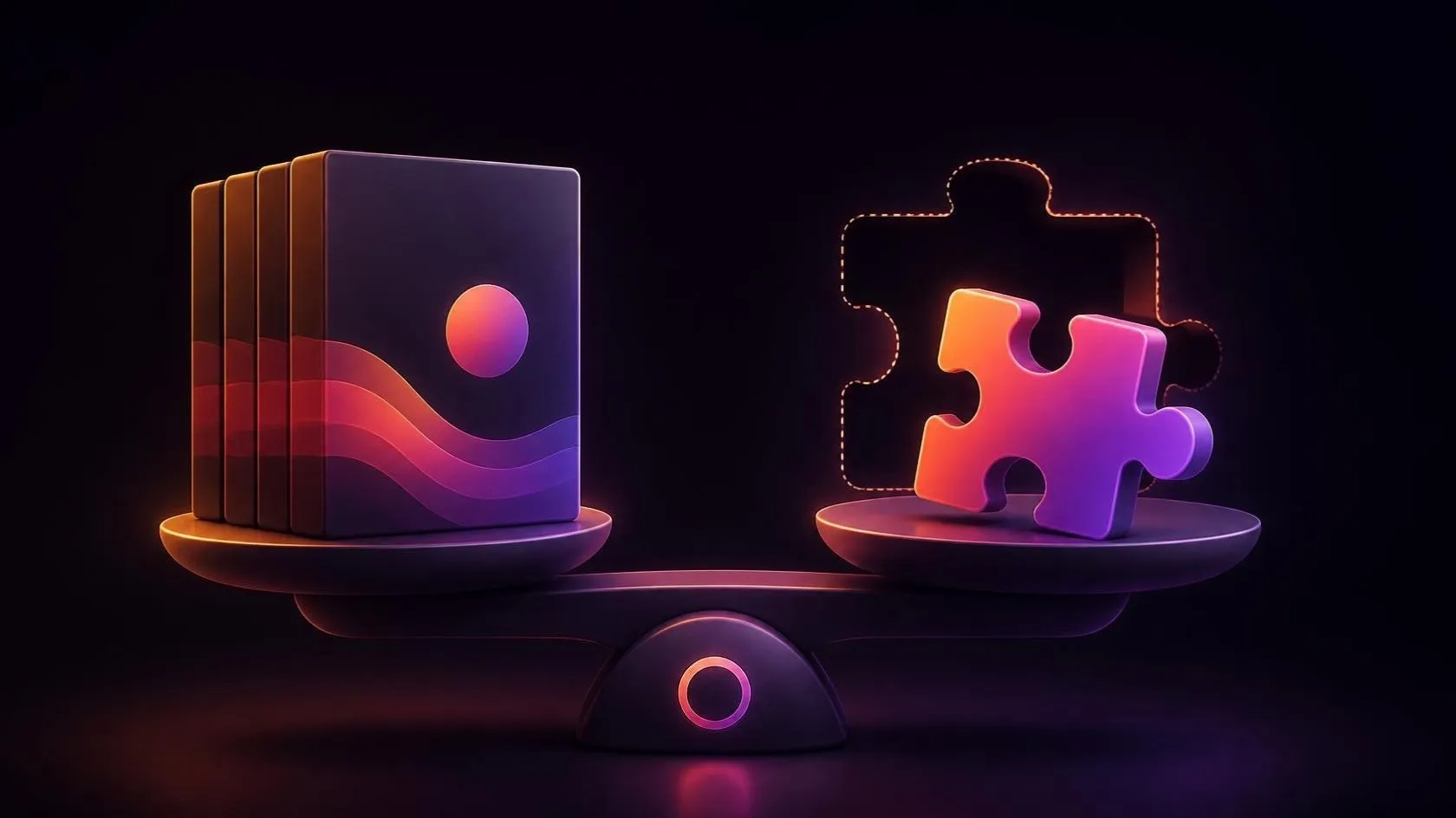
It’s one of the questions we are asked most often: “should we buy off-the-shelf software, or have our own developed?” There is no universal answer, but there is a right way to think it through.
When off-the-shelf software is enough
Off-the-shelf software (a CRM, an invoicing tool, a standard ERP) is often the right choice when:
- your processes are standard: they look like those of most businesses in your sector;
- the tool covers the essentials of your needs without contortions;
- you need to get started quickly, with a limited initial budget;
- nobody on your team works around the tool with spreadsheets on the side.
In that case, building custom software would mean reinventing what already exists.
When custom software is the answer
Custom software becomes relevant when the tool has to fit what sets you apart:
- your processes are specific: the way you produce, sell or track a case doesn’t fit into the standard boxes;
- workarounds are multiplying: parallel Excel files, data entered twice, copy and paste between tools;
- licences cost more and more as the team grows, for features you don’t use;
- integrations with your other tools are impossible or fragile;
- your security or confidentiality requirements go beyond what the tool offers.
Two real examples, from projects led by our founder, Anass Chabbab, in his previous roles. At Innova Home, in Morocco, orders were managed on paper and in spreadsheets. Custom software covering the whole chain, from order to invoice, saved more than 50% of the time spent handling each order. For a law firm in Sydney, a secure custom CRM/ERP, available on desktop, iOS and Android, cut processing time by 40%.
The third way: combining the two
It doesn’t have to be one or the other. Often, the best solution is to keep off-the-shelf software for the standard parts, accounting for example, and to build custom software for what is specific to you: a business-specific module, a customer portal, automations, or integrations that move data between tools.
Five questions to ask yourself
- How much of your process is really standard? If it’s the vast majority, start with off-the-shelf software.
- What do your current workarounds cost you? Time spent re-entering data and maintaining spreadsheets has a real cost, often underestimated.
- What is the total cost over several years? Compare licence fees, and how they will change over time, with the cost of development and maintenance, not just the starting price.
- Who will own the code and the data? With custom software, they’re yours. With off-the-shelf software, check your exit terms.
- How will your business evolve? A tool that fits today can hold you back tomorrow.
In short
The right choice is the one that serves your processes, not the other way round. An audit lets you decide objectively: we look at how you work and what your workarounds cost, then recommend the simplest solution that works, even if that’s off-the-shelf software.
Still unsure? Let’s talk it through on a 30-minute discovery call, free and with no obligation.
Let’s talk about it on a 30-minute discovery call, free and with no obligation.